

Fourth Monday Meetings
Building climate resilience through community action and nature-based solutions

Next Community Gathering
Monday 28th September
7.00pm - 9.00pm
Parkes Room, Wells Town Hall
Come and join us for an exploration of positive steps we can take to strengthen food resilience in response to climate change.
Discussion will focus on personal, farm and community actions, including growing and preserving food, supporting resilient farming practices, reducing waste, building a larder so you’re emergency ready, and building stronger local food networks.
Everyone is welcome and as usual we’ll open the doors 15 minutes before the start so arrive early to bag a chair.
Refreshments and mingling afterwards.
Please reserve a place by clicking on the button below - it’s not necessary but it does help us make sure we have enough chairs, tea cups, biscuits etc!
Past Fourth Monday Meetings
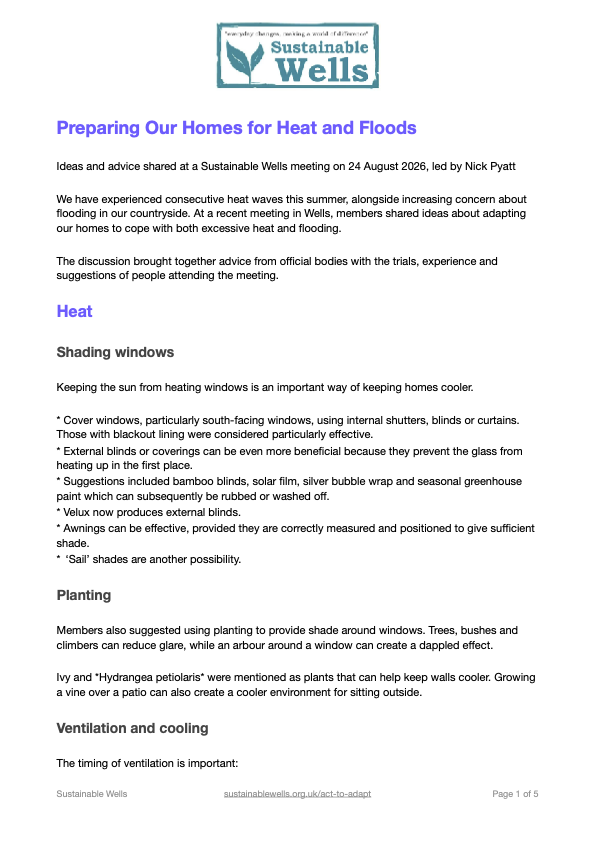
Preparing Our Homes for Heat and Floods
Ideas and advice shared at a Sustainable Wells meeting on 24 August 2026, led by Nick Pyatt
We have experienced consecutive heat waves this summer, alongside increasing concern about flooding in our countryside. At a recent meeting in Wells, members shared ideas about adapting our homes to cope with both excessive heat and flooding.
The discussion brought together advice from official bodies with the trials, experience and suggestions of people attending the meeting.
Heat
Shading windows
Keeping the sun from heating windows is an important way of keeping homes cooler.
Cover windows, particularly south-facing windows, using internal shutters, blinds or curtains. Those with blackout lining were considered particularly effective.
External blinds or coverings can be even more beneficial because they prevent the glass from heating up in the first place.
Suggestions included bamboo blinds, solar film, silver bubble wrap and seasonal greenhouse paint which can subsequently be rubbed or washed off.
Velux now produces external blinds.
Awnings can be effective, provided they are correctly measured and positioned to give sufficient shade.
‘Sail’ shades are another possibility.
Members also suggested using planting to provide shade around windows. Trees, bushes and climbers can reduce glare, while an arbour around a window can create a dappled effect.
Ivy and Hydrangea petiolaris were mentioned as plants that can help keep walls cooler. Growing a vine over a patio can also create a cooler environment for sitting outside.
Ventilation and cooling
The timing of ventilation is important:
Keep windows, blinds, shutters and curtains closed during the heat of the day.
Open windows when the temperature outside has cooled, particularly in the evening and early morning.
One suggestion was to leave an attic or similar high-level window open so that hot air can escape as it rises.
An extractor fan in the kitchen, with a window open, was suggested as a way of drawing cooler air into the house.
Cooling fans can be useful in bedrooms.
Some members described using water to help with cooling indoors, as is done in hotter climates. Further advice would be useful on this approach.
During the hottest weather, people may also find that sleeping downstairs, or even sleeping in the garden, provides a cooler alternative.
Saving and reusing water
Hot weather also raises the question of how we use water.
Suggestions included:
installing water butts wherever possible, connected to downpipes;
putting a bucket in the shower to catch water while it is warming up;
reusing this water to flush the loo;
using grey water to water plants.
Looking out for each other
Communities can be aware of people who may be particularly vulnerable during periods of extreme heat and check on them, offering practical help and suggestions where appropriate.
The current GOV.UK heat guidance similarly recommends checking on family, friends and neighbours who may be at higher risk during hot weather.
Flooding
Know your risk and make a plan
There is a flood-risk map for Somerset at:
If you know that your home is, or might be, at risk of flooding, have a simple plan ready for when warnings are given and when a flood occurs.
This could include:
preparing a ‘Go-Bag’ or ‘Grab Bag’ in case you need to evacuate quickly;
keeping a contact list;
agreeing a muster point;
knowing what to do when flood warnings are issued.
Protecting the home
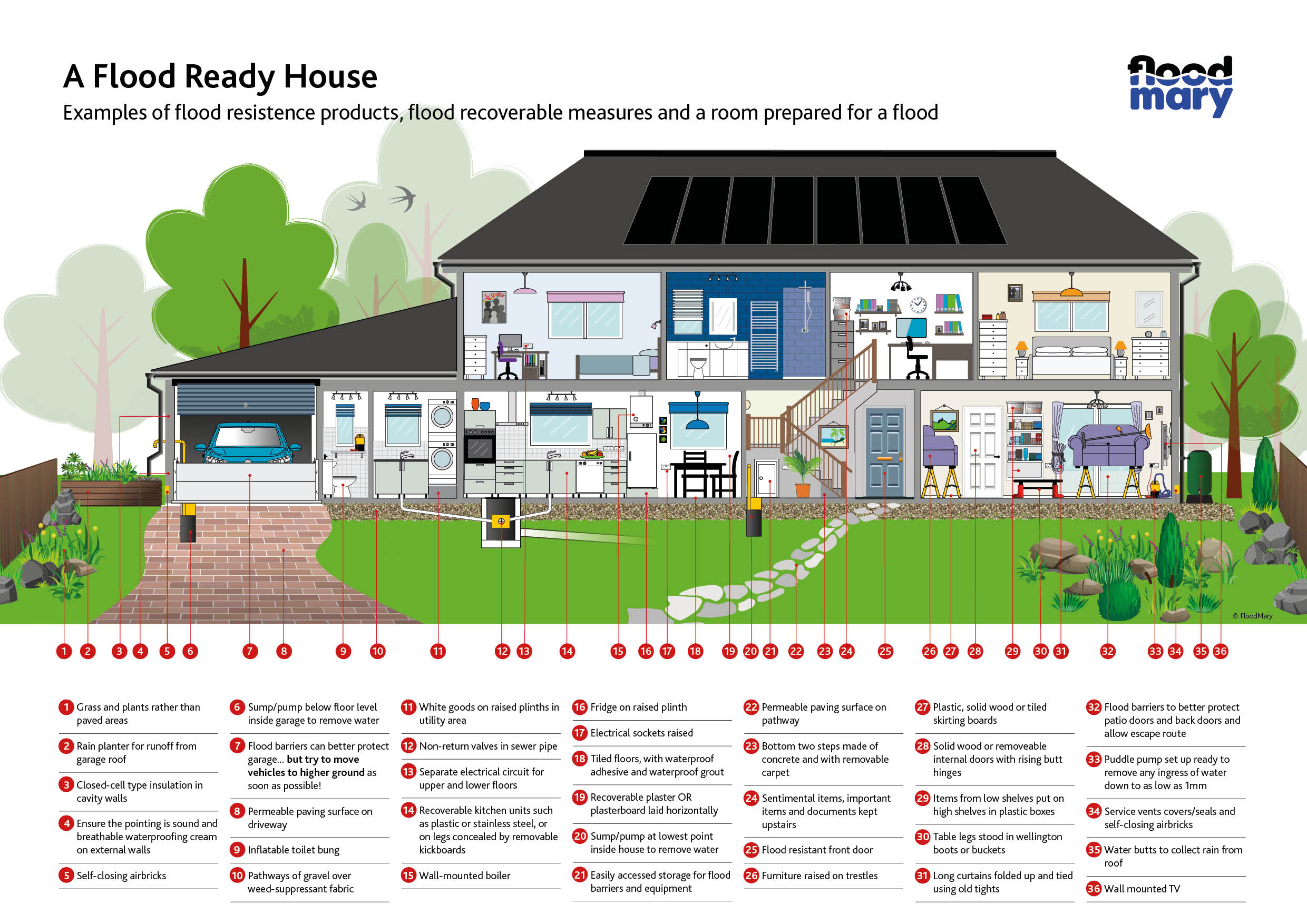
A number of measures were suggested to reduce the impact of floodwater:
Have strong tape ready to put around the outside of doors. It was suggested that this can be more effective than sandbags.
Consider fitting a flood door.
Have an exit point for water so that it can flow out.
B&Q sell flood-defence bags which absorb water.
Consider self-closing air bricks.
Be aware that water can seep into a house through the floor and up through toilets. A toilet bung can be used; one suggestion was to use a deflated/reinflated ball.
Think about flooring: carpets are particularly vulnerable, while flags or planks may dry out more quickly.
Keep valuables and important documents upstairs.
Electricity sockets could be higher up, and it may be worth considering separate circuits for downstairs and upstairs.
Septic tanks and water
Where there is a septic tank:
minimise water use during flooding;
keep away from the area around the septic tank.
Water purifiers for personal use and drinking water were also suggested in case the water supply becomes contaminated.
Gardens and drainage
Avoid large paved areas in the garden, as these can contribute to surface-water problems.
Suggestions included sustainable drainage measures such as soakaways.
The meeting also raised concerns about gully clearing by the county council, which was felt to be patchy and infrequent. It was suggested that parish councils might consider whether there is any action they could take on this issue.
Community preparedness
Flooding is also a community issue. Communities could:
be alert to which homes are in particularly vulnerable locations;
check on people whose homes may be affected;
consider having communal puddle pumps available;
consider sharing dehumidifiers;
agree muster points and contact arrangements.
Small changes to homes and advance preparation can make recovery after a flood quicker and easier.
Insurance
Householders should be aware of what their insurance covers and understand how to make a claim following a flood.
Useful references
Heat
Beat the Heat: Staying Safe in Hot Weather – GOV.UK
GOV.UK – Beat the Heat: Staying Safe in Hot Weather
Beat the Heat: Keep Cool at Home Checklist – GOV.UK
GOV.UK – Keep Cool at Home Checklist
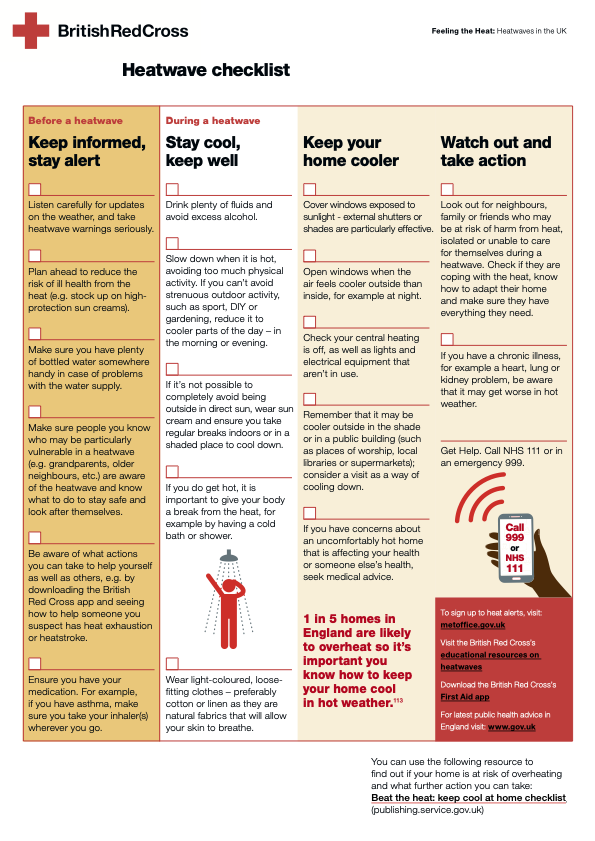
British Red Cross – Heatwave Checklist
Shade the UK - Overheating Guide for Homes
Flooding
Flood Map for Planning
Floodline: 0345 988 1188
National Flood Forum helpline: 01299 403 055
Flood Mary
Nick Pyatt also pointed out that there is a great deal happening behind the scenes to address both heat and flooding at a non-party-political government level, much of which may be unknown to us locally.
The meeting's main message was that individual adaptations to our homes, combined with community awareness and preparedness, can help us respond to a changing climate and make our homes more resilient to heat and flooding.
Preparing our homes
for heat and floods
Led by Nick Pyatt on 24th August

We are delighted to be working with a whole host of other partners to bring the Wells Act to Adapt plan to life.
Every month we will be taking a little bit of the plan and exploring all of the actions we can take.
We’ll be doing this with support from Wells City Council.
Come along to the town hall on the last Monday of every month at 7pm for an entering chat, a decent cuppa and perhaps even a slice of cake!
Each month there will be guest speakers helping us to understand the challenges that lie ahead and what we might do to adapt in readiness for them. Visit the events page to see what is happening each month.
To read the Act to Adapt plan click on the button below.